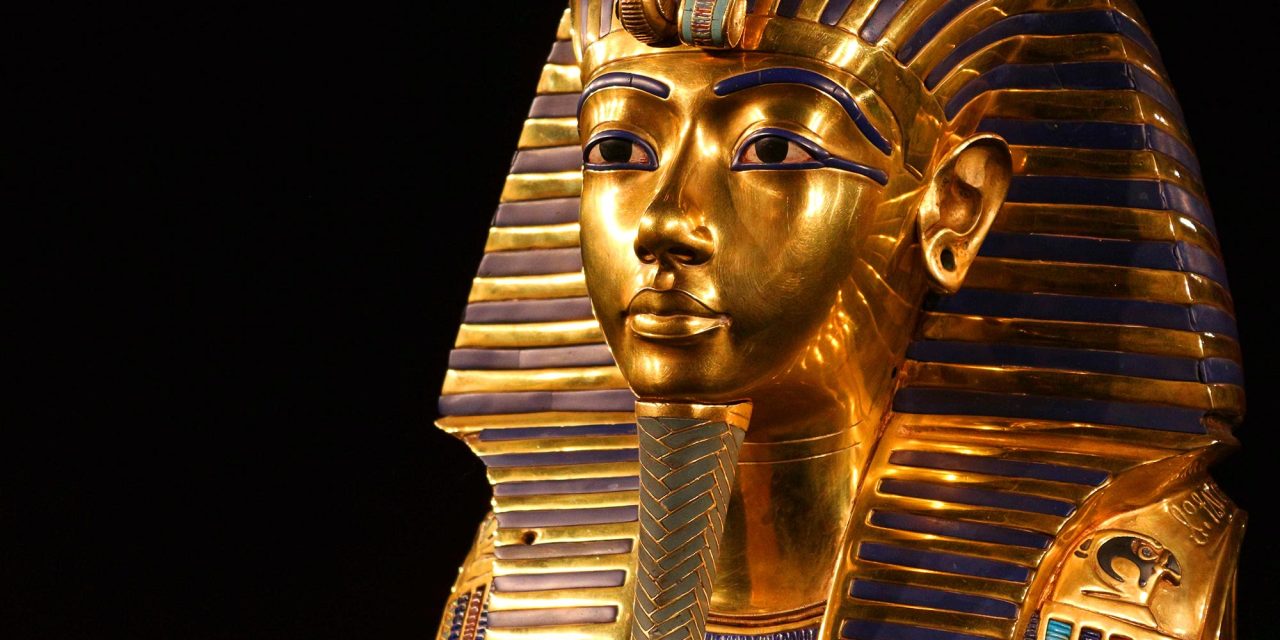
A recent analysis of an ancient alabaster vase from Yale’s collection has uncovered chemical traces of opium, confirming its widespread use in ancient Egyptian society far beyond rare or ritual contexts. The residue contained multiple opium biomarkers, and the vessel’s multilingual inscriptions link it to the era of Xerxes I. Similar findings in vessels from ordinary tombs suggest opium spanned social classes and centuries. Researchers now believe it’s likely that the many alabaster jars buried with King Tut—whose tomb was looted in antiquity, with visible scrape marks inside the containers—also held opium. This discovery reshapes our understanding of daily life, medicine, and trade in the ancient Near East.
Scientists Found Opium in an Ancient Egyptian Vase. King Tut May Have Taken It.